De rerum: an acknowlegement and explanation.
INDEX: Linnaean

Monday, June 30, 2014

Cymothoe alcimeda


The Battling Glider:
I have seen this butterfly on rare occasions in the NBG-KZN next to us, but always found it shy and flying high.
At top a male from our garden, then soon after, in the Gardens I found a female (second and third from top) and a male (next two) close to each other, sunning themselves in the early morning. These latter two are rather elderly individuals.
Their food-plant, the tree Kiggelaria africana is found in the Gardens.
 

Sunday, June 29, 2014

Heraclia (superba)


I have redone this photograph.
This may or may not be H. superba, there are about 50 spp. in the genus, many looking very similar.
See African Moths.

 
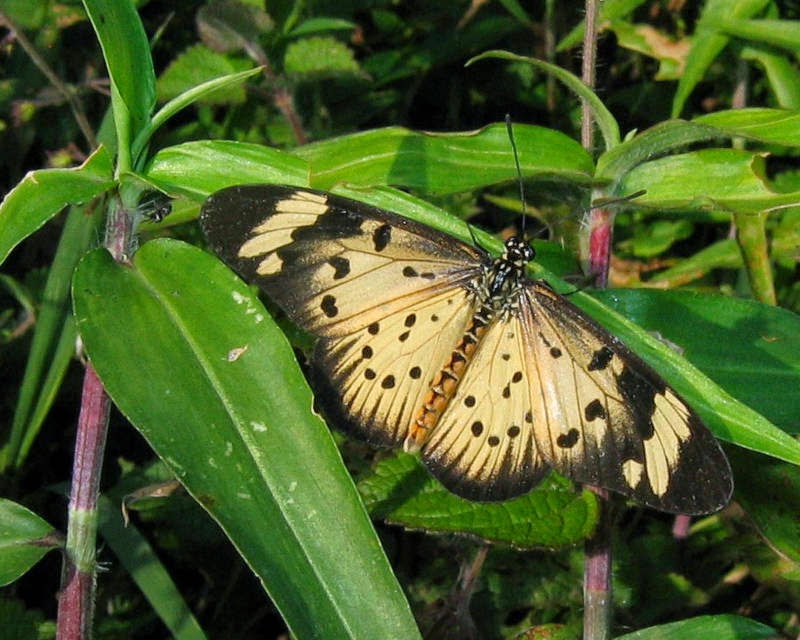
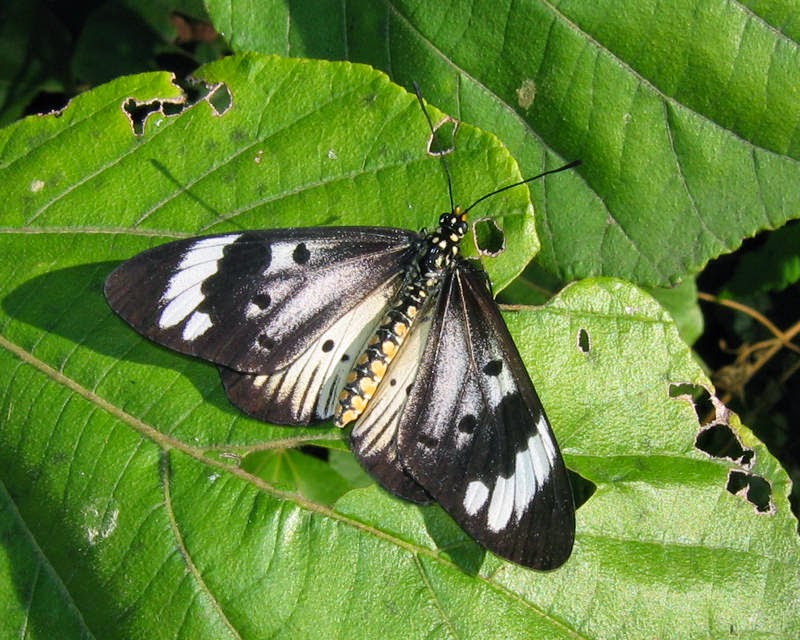
I decided a moth as wonderful as this deserves a place on a butterfly site. Such aposematic and warning colouration. Merle found this magnificent specimen in the house. I took it outside for its portrait. It is, I think the Superb False Tiger Moth. No wonder Butler (1875) gave it the specific name superba.
 

Colias elelecto


Tee African clouded yellow, although wide spread, I have not found this butterfly often: one in our garden, on in the NBG-KZN and one in the Kamberg, (its habitat preference is mountains.)
It is somewhat related to the Eurema and Catopsilia, Family Coliadinae.
   

Friday, June 27, 2014

Deudorix antalus - (2) -


More of the Brown Playboy:
The top three pictures of the same female on a bougainvillea flower. She has an attractive brown outer and blue inner on the upper side.
Hewtson's description included it being hirsute. They also seem to have an orange cap above the eyes (frons?), and on the outside of the distal antennae.
Below, the male has all brown upper side with a delicate violet sheen.


See also Deudorix antalus -(1) -.
   

Deudorix antalus - (1)-


The Brown Playboy (both male and female are called thus!)
We had at least 2 of its food plants, Syzygium and and Schotia, in the NBG next to us.


I have included a close up to show the detail. Hewtson (1863), who created the genus, describes the large head, prominent eyes, and conspicuous lobe on the anal angle of the hind wing - quite remarkable.
See also Deudorix antalus - (2) -.
 

Sunday, June 22, 2014

Telchinia encedon - (2) -


I have split this post into two, (see previous post.)
At top another form fulva.
Below that a form fumosa, on a Commelina. Next mating, and lastly a female ovipositing on a Commelina, its foodplant.
    

Telchinia encedon - (1) -


This is one of our most common butterflies, and I have been putting off posting it.
It has different forms, some of which I have posted here.
The reddish ochre form (fulva) is our most common form, and mimics the African Monarch. The buff form is fumosa (second and third above, the same individual.) Lastly the white is form lycoides,
Again the species has been moved from the genus Papilio (Linnaeus 1758) to Acraea (Doubleday 1848), to Hyalites (Doubleday 1848) now Telchinia (Hubner 1819.)
See also Telchinia the genus. and Telchinia the next post.